
Oh Fudge It! — Revisited
Six Years, Several Saucepans And A Lot of Sugar Later
I first wrote this blog in March 2020, when I had some fairly definite opinions about what did — and didn't — constitute proper fudge. Six years and a lot more confectionery experience later, it seemed like a good time to revisit it. Have I changed my mind? Well, maybe a little.
It’s Fudge — I Think
What does fudge mean to you? Should it be smooth, creamy and soft? A bit chewy? Crumbly and melt in the mouth? Some people think fudge is always made with chocolate. It’s sweet, it’s sugary, it’ll send your blood sugar through the roof but, what is it?
At an event way back in 2019, a customer took a sample from my table and asked what it was. She was quite shocked when I told her it was fudge as she’d never tasted any that hadn’t been made in a microwave and contained chocolate. She didn’t recognise the colour or texture as ‘fudge’.
That got me thinking about all the different types of sweet treats out there calling themselves fudge. Which of them is “proper” fudge? Is there a definitive answer?
The Old Fashioned Way
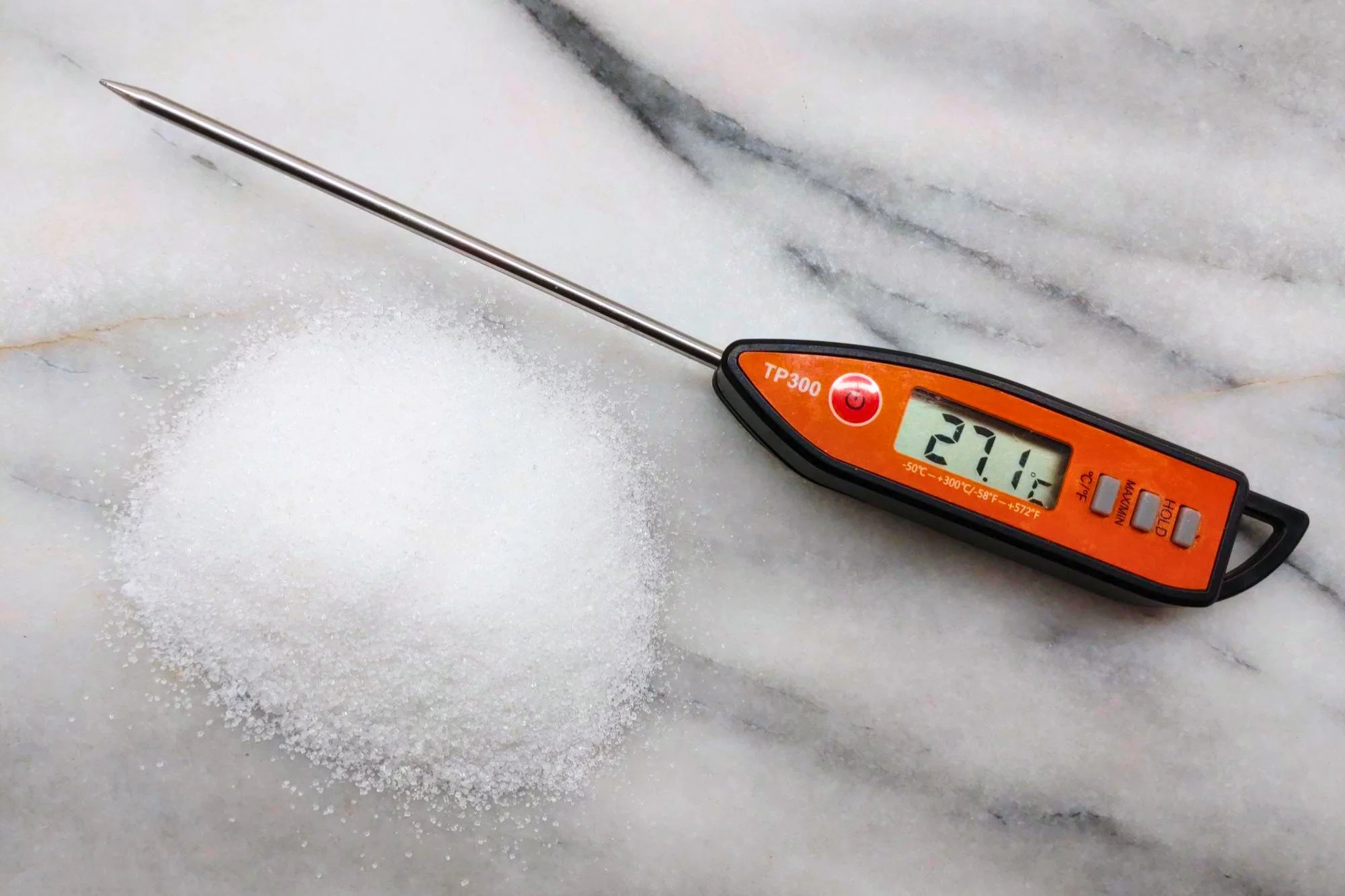
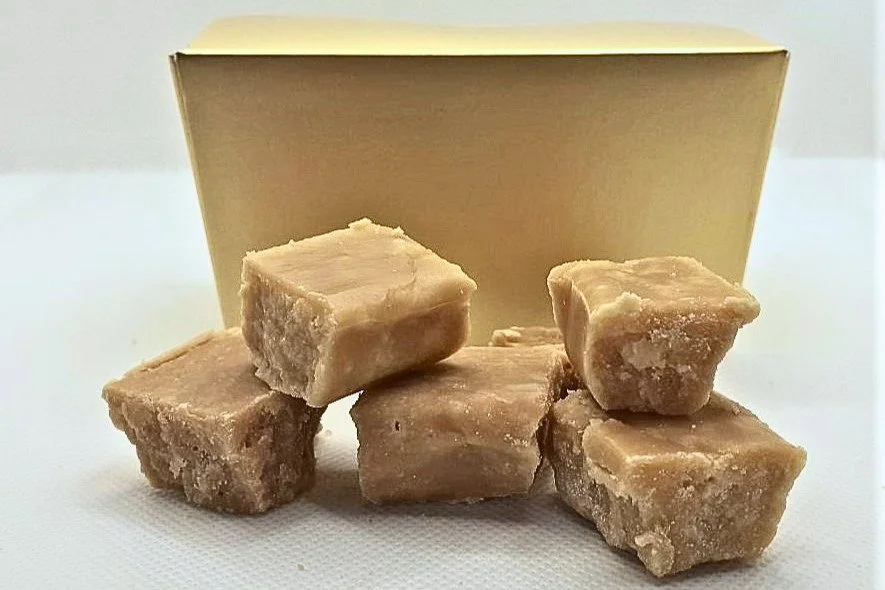
Traditional fudge is a sugar confection made by cooking sugar with butter and a dairy ingredient — milk, cream, condensed or evaporated milk — to the soft-ball stage, then beating it as it cools to develop the characteristic crystalline texture. This produces a firmer result with a sugary, melt-in-the-mouth texture that crumbles when you cut it. It’s not the soft, squidgy confection that the
word ‘fudge’ suggests. It doesn’t necessarily form those perfectly neat, smooth-edged squares either — although I’m no longer prepared to declare that having straight edges automatically disqualifies something from being proper fudge!
The recipes I use are from my mum’s collection of handwritten recipes, so they’re considerably older than Truffle Witch itself. My basic fudge recipe uses sugar, butter and evaporated milk, cooked the traditional boiled-sugar way.
Making this type of fudge is pretty labour intensive and can be tricky to get right. Even using the same recipe, ingredients, pan and cooker, one batch can behave differently from the next. Atmospheric pressure can affect boiling point too, so weather conditions may make a difference. One batch may come to temperature in twenty minutes, while another takes nearer thirty, so you can’t simply rely on the clock. You have to watch what’s going on in the pan.
Take your eyes off it for a second and it can boil over or burn. And never, ever taste it while it’s cooking — hot sugar is nasty, burny stuff and you’ll do yourself a proper mischief!

It’s Not Tablet, It’s Fudge
I’ve often had people ask if my fudge is Scottish tablet. I tell them it’s similar to tablet, but softer. Then they ask, “but is it tablet or not?”
In my experience, tablet is harder, more brittle and more crystalline, yet there can be very little difference between a traditional tablet recipe and the recipe I use
as the basis for most of my fudge. A lot of the difference comes down to how the mixture is worked as it cools.
I know this because I’ve both under-beaten and over-beaten fudge. Beat it too little and it stays too soft. Beat it too much and it becomes firmer and grainier — much closer to tablet. Beat it like a mad thing and you’ll simply get there faster.
Since writing the original version of this blog, I’ve met a professional tablet maker who has exactly the opposite problem to mine: people keep calling her tablet fudge. So apparently neither of us can win.

Microwave Fudge — Cheating?
There are plenty of recipes for fudge made by mixing ingredients together and giving them a few minutes in the microwave. They’re quick, easy and avoid the hazards of boiling sugar, and many use ready-made ingredients such as biscuits, chocolate or sweet spreads. The result is usually quite different from traditional boiled fudge — softer, and without that crumbly melt-in-the-mouth texture.
Back in 2020 I was rather dismissive about this sort of fudge and wrote:
“Would I eat it? Yes. Would I sell it? No, it’s cheating!”
Six years later, I’ve had to revise that opinion slightly. This year I’ve experimented with fudge from professional recipes using condensed milk and chocolate. On paper, the ingredients aren’t dramatically different from many home recipes, but the proportions, the way the different chocolates are combined and the use of higher-cocoa-content chocolate produces a much firmer fudge.
So perhaps I was a little too quick to blame the ingredients. As with most confectionery, the recipe and method matter rather more than a simple list of what goes into it.
Gourmet Fudge - Is It Better?
There are lots of ‘gourmet’ fudge brands around. They may tell you their fudge is boiled in a 300-year-old copper kettle, stirred five times anti-clockwise at noon on the second Wednesday of the month, or made only with cream from cows called Mary. Some of those details may be perfectly genuine, but are they worth paying extra for if you don’t actually like the fudge?
At the London Coffee Festival some years ago, I tried a sample of very expensive ‘award-winning, crumbly fudge’ from a West Country company. I spat it out because it was overly sweet and cloying, stuck to the roof of my mouth, and I really disliked the texture. (I did spit it into a tissue, in case you were worried about my manners.)
As it happens, I’ve since met a professional fudge maker who really does use a traditional fudge kettle — so perhaps I was being a little unfair to the copper kettle.
Fudge, By Any Other Name, Would Taste As Sweet….
But, what’s poison to one witch is ambrosia to another. Ultimately, it all comes down to personal taste. There may be a ‘proper’ way to make fudge but, boiled, microwaved or from an industrial vat, if you enjoy it, that’s good enough.
Fudge is no longer part of my regular online range. For a while there were so many specialist fudge makers around that it simply wasn’t worth the time and effort involved in making traditional fudge alongside everything else. Curiously, quite a few of those businesses seem to have disappeared since then.
Maybe it’s time for a comeback….